25 Years Later: The Audi A2 That Changed the Game Still Shines Bright
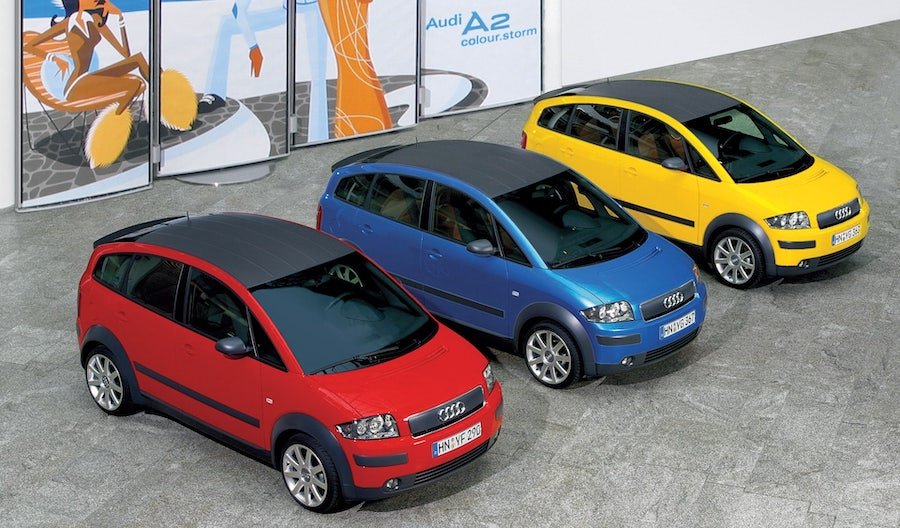
This year marks the 25th anniversary of the Audi A2, a car that was both ahead of its time and out of step with the market it entered. Launched in late 1999, the A2 was a bold engineering experiment that showcased Audi’s ambitions to push lightweight construction, efficiency, and premium quality into a small car segment dominated by utilitarian choices.
A Radical Beginning
The A2 debuted with the Audi Space Frame (ASF), an all-aluminum monocoque that dramatically reduced weight while maintaining rigidity. This made the car light, agile, and efficient, particularly in the 1.2 TDI “3L” variant, which became the first four-door car in the world capable of sipping just three liters of fuel per 100 km. That was long before fuel efficiency, emissions, and electrification became everyday headlines.
It was also a car designed with aerodynamic obsession: smooth lines, tight panel gaps, and a drag coefficient that rivalled larger, more expensive sedans. Audi wanted the A2 to be the premium small car for the new millennium, “a small Audi, not a cheap Audi.”
Why It Didn’t Work
Despite its ingenuity, the A2 struggled in the marketplace. Producing aluminum cars at scale was ruinously expensive, meaning the A2 carried a price tag closer to an A4 than to rivals like the VW Golf or Ford Focus. Customers balked at paying premium prices for a small hatchback, even one with such futuristic credentials. By the time Audi killed it in 2005, only about 176,000 units had been sold.
That decision has been revisited ever since. Many now consider the A2 a cult classic, admired for its clever engineering, efficient packaging, and quirky design. Its colour.storm edition in bold paint schemes like Imola Yellow and Misano Red is still a fan favorite among enthusiasts.
Echoes of the A2
Looking back, the A2 foreshadowed much of what dominates the industry today, lightweight design, efficient propulsion, and a focus on technology in smaller packages. In 2025, Audi CEO Gernot Döllner even reaffirmed that “the electric car is simply the better technology”, as the brand leans heavily into EVs like the A6 e-tron and Rivian-backed future models.
Yet the road to electrification hasn’t been simple. The RS6 e-tron dream has been shelved, leaving the legendary Avant to carry on with a V8 for now. That tension, between cutting-edge EVs and the enduring appeal of combustion icons, is one Audi knows well, and one the A2 hinted at decades ago.
Meanwhile, Audi’s flagship sedans are still in the thick of battle. The newly unveiled 2026 Audi A6 will have to square up to Mercedes and BMW on pricing and specs, fighting for relevance in a shrinking executive saloon market.
Why the A2 Matters 25 Years Later
The A2 might have been commercially doomed, but it was conceptually spot-on. Its lightweight construction, aerodynamic efficiency, and premium positioning are principles that modern EVs follow religiously. Today’s Audi models may trade aluminum for battery packs, but the DNA of pushing boundaries at the small-car level lives on.
As Audi reflects on 25 years since the A2’s launch, it’s worth remembering that sometimes the market isn’t ready for a car, but that doesn’t mean the car is wrong. In many ways, the A2 was the right idea, just two decades too early.
Related News
