Finally! The Toyota GR GT Is Here, And It's Ready To Hunt Supercars
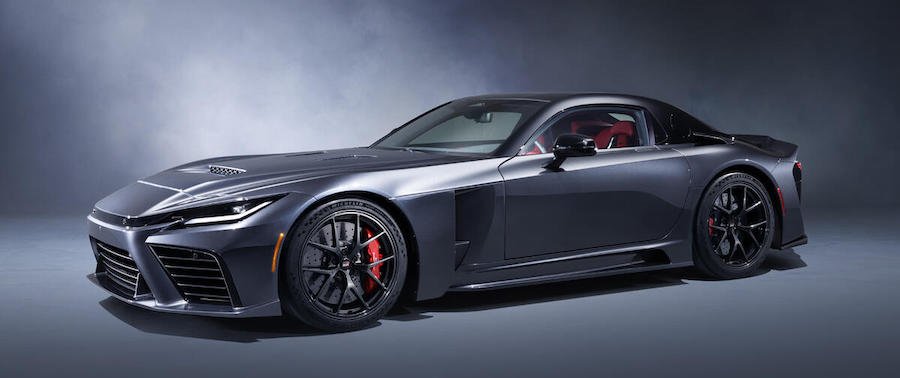
Now, at least half of the wait is over. Toyota is finally giving us some real information about its version of the new sports car, along with the racer that will come with it. Say hello to the Toyota GR GT and its GT3 sidekick.
The Child Of 2000GT And LFA
Toyota is calling the GR GT its new flagship sports car. It's a model meant to walk the path blazed by the iconic Toyota 2000GT and the Lexus LFA. Toyota also wants it to be a car that helps pass what it calls "the secret sauce of car-making" to its next generation. The company describes it as its "Shikinen Sengu," a centuries-old Japanese ritual in which the Jingu Shrine is rebuilt every 20 years. It's a big deal, and invoking it shows this car is a big deal for Toyota.
The heart of the GR GT is a brand-new 4.0-liter twin-turbo engine. It's Toyota's first production twin-turbo V8, a hot-vee layout with an oversquare design. The engine is short in height, and the bore-stroke ratio should let it rev to the moon.
Toyota hasn't said exactly how much power it will make, but the target is 641 horsepower and 627 pound-feet of torque. Those are oddly specific figures for a target, so we suspect Toyota already has things pretty well dialed in. The engine will have dry-sump oiling and a thinner-than-usual oil pan, pointing to its racing design. In fact, Toyota says much is shared between the GT and its GT3 racing sibling, but only the production car will be a hybrid. A motor-generator will be integrated into the new wet-clutch eight-speed automatic in the rear transaxle, mated to a limited-slip rear differential.
This vehicle is Toyota's first all-aluminum body frame. It's more rigid thanks to large castings in the main structure, but lighter thanks to the alloys used and Toyota's techniques for fastening it together. The body will be a mix of aluminum and carbon fiber panels to keep it light and strong.
Race-Ready Double-Wishbone Suspension
Both ends of the car get a double-wishbone suspension with aluminum arms. Toyota said it was designed around a linear response and high controllability. The basic parts, Toyota said, can be shared with the race car, which should mean excellent durability and handling.
Brembo carbon discs at all four corners and specially-designed Michelin Pilot Sport Cup 2 tires round out the vehicle's hardware. Toyota says it took the car's development to its simulators, but it also went to Fuji Speedway, the Nürburgring, and other racetracks where pro drivers dialed in the dynamics to be perfect.
The focus for Toyota's stylists was on the wind tunnel performance. Toyota called it "aerodynamics first," with an expected top speed of 199 miles per hour and the desire for limited changes for competition use. Even the driving position was based around track priorities, including putting exterior visibility high on the list and moving controls as close to the driver as possible.
Toyota wants Gazoo Racing to lead its efforts to help build better road cars. That means taking the lessons learned on the track from the GR GT3, which debuts simultaneously with the GR GT, and applying them to more pedestrian models like the next RAV4. In the meantime, we get to revel in a new era of Toyota performance, the likes of which haven't been seen in a very long time.
