Mate Rimac Doubts The 3,000-HP Yangwang U9 Actually Makes That Much Power
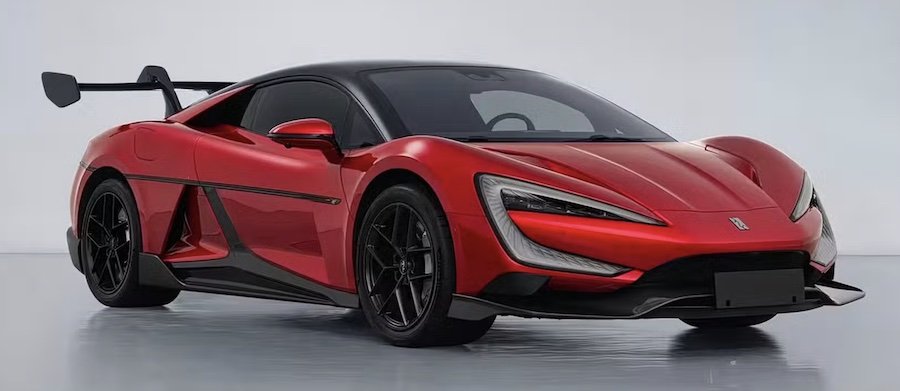
Although the CEO of Bugatti Rimac may be smarting from the Nevera losing its Nürburgring track record to another Chinese EV, the Xiaomi SU7, in June, he still shows his work in comments on the Facebook group Apex Automotor, saying that the Yangwang U9's motors might be able to theoretically produce its stated output, but the lithium-iron phosphate (LFP) battery chemistry wouldn't be able to deliver that much juice "even for 1 second."
Genuine Doubts Or Sour Grapes?
Rimac's comments on the Yangwang U9 were reportedly removed by Facebook for not being relevant, but Apex Automotor administrator Dan M Henderson copied and pasted the CEO's work into a post of its own. Rimac says that the 80-kilowatt-hour LFP battery in the Yangwang U9 would need to have a discharge rate of 20+C (meaning a complete and total discharge in three minutes) in order to produce the claimed power output – something he says is unlikely.
"Since most Chinese EVs use LFP cells, I doubt that any of them can deliver 20+C discharge rates (even for 1 second) that would be needed to deliver 2-plus megawatts [2,683 horsepower] of power."
–Mate Rimac, via Apex Automotor on Facebook
Rimac's claim is that LFP cells, which many Chinese EVs use because they're cheaper to produce and more resistant to degradation, simply aren't capable of the discharge rate required to make the Yangwang U9's quad 744-hp motors churn at full output. He also points out that his own creation, the Nevera R, can put out 1.5 MW (2,012 hp) and could potentially put down more if the entire powertrain were beefed up, but even at its current level, the car is limited simply by nature of modern high-performance rubber. At full power, the Nevera R exceeds the traction limit of its tires until it's going 100 miles per hour, and something with the claimed 3,000 hp of the Yangwang U9 Track/Nürburgring Edition would probably be grip-limited until 150 mph or more.
There Might Be Some Fudged Numbers
If Rimac's claims are accurate, then it's possible that Yangwang parent company BYD is jockeying its flagship performance EV's power output a bit. It's likely that each motor can indeed produce a peak of 744 hp on its own, but perhaps not all four at the same time. Such a powertrain layout would still give the higher-performance U9 incredible flexibility on the track, routing full power to the wheels with the most grip on corner exit and turning each motor into a generator for tighter turn-in on corner entry and improved balance everywhere else.
For what it's worth, BYD hasn't announced any plans to set a new track record on the Nürburgring, which would put the Rimac Nevera in the bronze position on the podium if successful. Even if that does happen, Mate Rimac can still lean on the two dozen performance records the Nevera R set last month, including when it beat the Koenigsegg Jesko Absolut by more than 2 seconds in the 0-249-0-mph acceleration and braking test. Those achievements are safe from the Chinese for awhile, at least as long as the CEO's claims about discharge rates and traction limitations prove true.
