Mate Rimac Reveals He Had A 'Huge Fight' With The Volkswagen Group Over Bugatti's Future
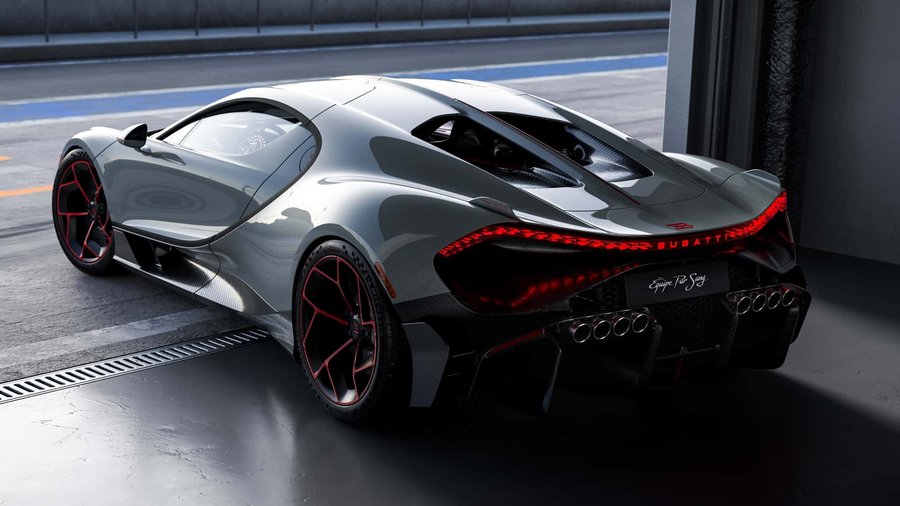
Mate Rimac has revealed how he went against the wishes of Volkswagen Group executives to save Bugatti from an all-electric future. Despite building his reputation on electric hypercars, the Croatian entrepreneur believed battery power wasn't the right direction for the French brand. Getting everyone else on board, however, was anything but easy.
Speaking in an interview with Classic Driver, Rimac recalled that the VW Group initially wanted Bugatti's Chiron successor to be a four-seat electric SUV. Yes, an SUV. The idea might sound bizarre today, but the company considered it around 2020, when enthusiasm for electric vehicles was running high, and automakers were scrambling to electrify their lineups.
Rimac's company was involved in developing the electric powertrain, with plans to adapt technology from the now-discontinued Nevera for the proposed high-riding Bugatti. However, he quickly realized that making the project work would be extremely difficult. The engineers couldn't simply borrow an existing platform for the electric SUV, meaning the VW Group would have had to spend billions developing a dedicated architecture. The business case never added up, and the project eventually stalled without approval from Germany.
Rimac Went From Proposing To Build Bugatti To Taking It Over
With Bugatti lacking a viable Chiron successor, Rimac saw an opportunity. He approached VW Group management with a proposal for his company to develop and build the entire vehicle, leaving the German conglomerate to sell it. This is where the story takes an interesting turn: During a meeting, a VW Group executive asked, "Why don't you just take over the company?"
Rimac initially thought the suggestion was a joke. He didn't even mention it to anyone after returning home. A few months later, the executive called again and asked why he hadn't responded. That's when the Croatian entrepreneur realized the offer was serious. What followed was a two-and-a-half-year negotiation process. When discussions turned to Bugatti's future, VW Group and Porsche executives told Rimac that the next hypercar had to be fully electric.
It wasn't an unreasonable suggestion on paper. Rimac had founded an electric-car company, developed the Concept One and Nevera, and was already working with major automakers on battery technology. Yet he strongly disagreed with the proposed direction.
"I went into a huge fight with them because I thought that was the wrong thing for Bugatti. So I said, 'No, I don't want to make an electric Bugatti.'"
The VW Group Wanted To Reuse The Chiron Platform
The VW Group eventually agreed to let Rimac pursue a hybrid instead, but another disagreement followed. The proposed compromise involved using the existing Chiron platform to limit costs. That would have imposed packaging constraints to accommodate the battery, resulting in what Rimac considered a compromised product.
Before the transaction with the VW Group was even completed, Rimac's company paid Cosworth out of its own pocket to begin work on the new combustion engine. To prove the concept, engineers built a four-cylinder prototype representing a quarter of the planned 16-cylinder engine. It retained the same combustion chamber and cylinder-head design, allowing the team to evaluate performance, emissions, costs, and development timelines.
The results supported the V16 approach, giving Rimac the evidence he needed to convince everyone involved. The eventual result was the Tourbillon, featuring a naturally aspirated 8.3-liter V16 paired with a hybrid powertrain. Six years after development began, Rimac says the decision has paid off. Bugatti has sold every Tourbillon it plans to build.
That's why Rimac was willing to fight VW Group’s initial plans, even though an electric Bugatti might have seemed like the obvious choice coming from the man behind the Nevera. The irony is hard to miss: The guy who built one of the world's fastest electric cars was also the one who convinced the VW Group that its flagship brand shouldn't go fully electric.
The Tourbillon's V16 is arguably a pretty convincing argument that he was right.
