The 2026 Honda Prelude Is Here: Hybrid Power, Type R Suspension, And No Transmission
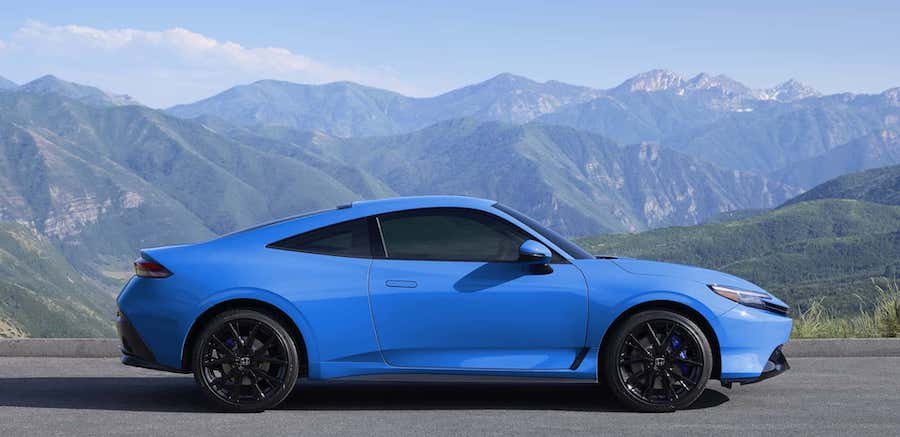
But more on that later. It may not have the stick from the Civic Type R, but the Prelude does have that car's suspension and chassis components, albeit tuned to the softer side of life.
"We are thrilled to be bringing back such an iconic nameplate to the Honda lineup. The Prelude's return demonstrates our commitment to exciting, fun-to-drive vehicles and will help to accelerate our hybrid-electric sales in the years ahead." – Jessika Laudermilk, assistant vice president of Honda National Auto Sales.
Honda says the Prelude aims to deliver a "Grand Touring" feel with sharp steering and precise handling, while remaining comfortable to drive every day. This positioning is interesting because Honda has not offered a two-door model since the Civic Coupe went out of production at the end of the 2020 model year, and most other vehicles in this category are dedicated sports cars. The Prelude has been a poorly-kept secret, since Honda has slowly released a slew of details about it, but we finally know some key ones, including how much power it will produce.
Let's get the bad news out of the way; the Prelude doesn't have a manual transmission. That's a bummer, because Honda makes what is arguably the best one on the market at any price. Let's hope Honda rectifies this with a high-performance model in the future. At launch, the Prelude ships with Honda's award-winning two-motor hybrid system, the same one found in the Civic Hybrid. And when we say the same one, we literally mean the same. It produces 200 horsepower and 232 pound-feet of torque, identical to the Civic Hybrid. We were hoping Honda would boost the power a bit, but it did not. Remember, the 2001 Prelude also produced 200 hp, but it only had 156 lb-ft of torque.
Power goes out to the front wheels, but not through a continuously variable transmission or "eCVT" as you might read elsewhere. We can not stress this enough: the Honda Prelude does not have a transmission of any kind. Got it? Good. During most driving, the electric motor drives the wheels through a single-speed reduction gear (like an electric vehicle), and the gasoline engine acts as a generator for the battery. Only during a hard launch or highway cruising can a lockup clutch engage to connect the engine to the wheels.
It Has Gears... Sort Of
Now that we just finished telling you the Prelude has no transmission, it's time to tell you how Honda technically created a new type of transmission for it. The Prelude has a feature called the S+ Shift System, which simulates the feeling of rev-matched downshifts and engine sounds. Think of it like a Hyundai Ioniq 5 N, but a hybrid, not an EV. Pressing the S+ button next to the drive selector will change the digital gauges from a hybrid power gauge to a traditional tachometer.
Paddle shifters on the steering wheel then let drivers "shift" through simulated gears. S+ mode also delivers rev-matched downshifts, gear holding, and engine blips. This mode can be used independently of the Prelude's other drive modes: Comfort, GT, Sport, and Individual. Switching between these modes adjusts the powertrain response, steering assist, suspension dampening, engine sound, gauge cluster layout, and even adaptive cruise control aggressiveness.
Serious Suspension Hardware
As we mentioned, it may only have the power of a Civic Hybrid, but the Prelude gets the handling bits from a Civic Type R. Specifically, it includes the same Brembo four-piston front calipers (painted Prelude Blue), 13.8-inch two-piece rotors (12 inches in the rear), dual-axis strut front suspension, and adaptive dampers (with unique tuning). Honda says the Prelude's dampers will be softer than the Type R, and even cushier than the Acura Integra Type S to deliver a proper GT experience. Wide fender flares give it the same width as a Type R but the roofline and wheelbase are shorter.
All-season tires are the standard choice, but Honda will offer an available ExtremeContact Sport02 Summer tire for buyers who want to get the most out of their Prelude. This is the first car to debut Honda Agile Handling Assist, which improves driver confidence through the steering and braking systems. Honda's press release is a little vague on how it works, but more information should be available in due time.
Civic Cabin, Done Sporty
Honda says the Prelude has a "driver-focused cabin," which is not untrue if you believe the Civic's interior is focused on the driver. Perhaps unsurprisingly, the Prelude shares some interior elements with the Civic, but there are some distinct differences. Let's start with the similarities. The nine-inch touchscreen is shared with the Civic and features wireless Apple CarPlay and Android Auto, plus built-in Google and a wireless phone charger. There's also a new 10.2-inch digital gauge cluster with a large tachometer and multi-information display. A Bose Centerpoint audio system comes standard with eight speakers, including a subwoofer in the trunk.
The dashboard looks similar to the Civic, including the unique air vents with grate-like covers over them. Honda did give the Prelude a unique center console with a push-button shifter, which is wrapped in synthetic leather. A flat-bottom steering wheel includes a 12 o'clock marker at the top and alloy paddle shifters. Prelude customers can opt for two interior themes: two-tone Blue and White or Black, both of which feature blue accents. Heated front leather seats feature a perforated houndstooth pattern with the Prelude logo embossed on the headrest. Honda says the driver's seat is more heavily bolstered, yielding a more secure driving position.
It's Sort-Of Practical, Too
Unlike the Civic Coupe or any previous Prelude, this sixth-generation model is a hatchback. Honda does not quote a cargo capacity figure, but the hatch area behind the seats is substantial, and the rear seats can fold in a 60/40 split to create a cavernous area. Two sets of golf clubs will fit with ease. It's easy to drop the seats, but getting them back up proved to be a challenge based on the height of the roof. A strap on the back of the seats could fix this issue.
Honda says the rear seat delivers a "generous" 32 inches of legroom, which is 3.9 inches less than the Civic Coupe, but 3.9 inches more than the old 'Lude. We had a chance to sit in the back seat, and found the legroom to be decent, if not a slight squeeze for a 5'8" adult. Headroom was a bigger issue; your head would almost certainly be pressed against the hatchback glass. More annoyingly, getting into the back seat could be easier. You need to tilt the seat forward with one lever, then reach under the seat to slide it; it doesn't move in one motion.
Coming Later This Year
The 2026 Prelude arrives at US Honda dealerships this fall, but we don't know how much it will cost. If Japanese market pricing is correct, the Prelude could cost over $40,000 when it arrives in the US. That seems a bit steep for a 200-hp two-door coupe, but perhaps those exchange rates are not accurate. Official pricing should be announced closer to the market launch.
