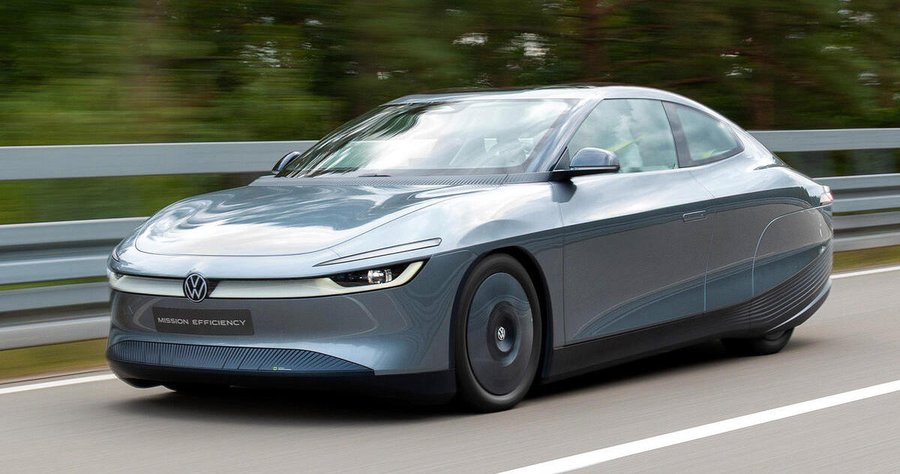
Based on the same MEB+ architecture as the new ID Polo, the Mission Efficiency prototype has achieved a new high for efficiency, having clocked 8.27mpkWh over a 794-mile drive from Wolfsburg to Vienna – and up to 9.02mpkWh discounting the energy lost while charging.
For reference, the ID Polo's claimed maximum is around 5.4mpkWh. During the test run, the Mission Efficiency achieved a 406-mile real-world range from one charge of its 52kWh battery - an increase of 124 miles on the ID Polo's WLTP range.
The drive, which routed via Poland and Berlin, included speeds of up to 86mph on the autobahn and averaged 42mph, but a separate test at constant speeds in controlled conditions pushed the concept car north of 500 miles without stopping.
To minimise the energy required to cover ground, the Mission Efficiency combines the entry-level ID Polo's 114bhp front-mounted motor with the top-spec version's battery. By reducing the 52kWh pack's 'safety' buffer - a common feature used to ensure a battery's performance is sustained over decades - VW boosted its usable capacity to 54kWh.
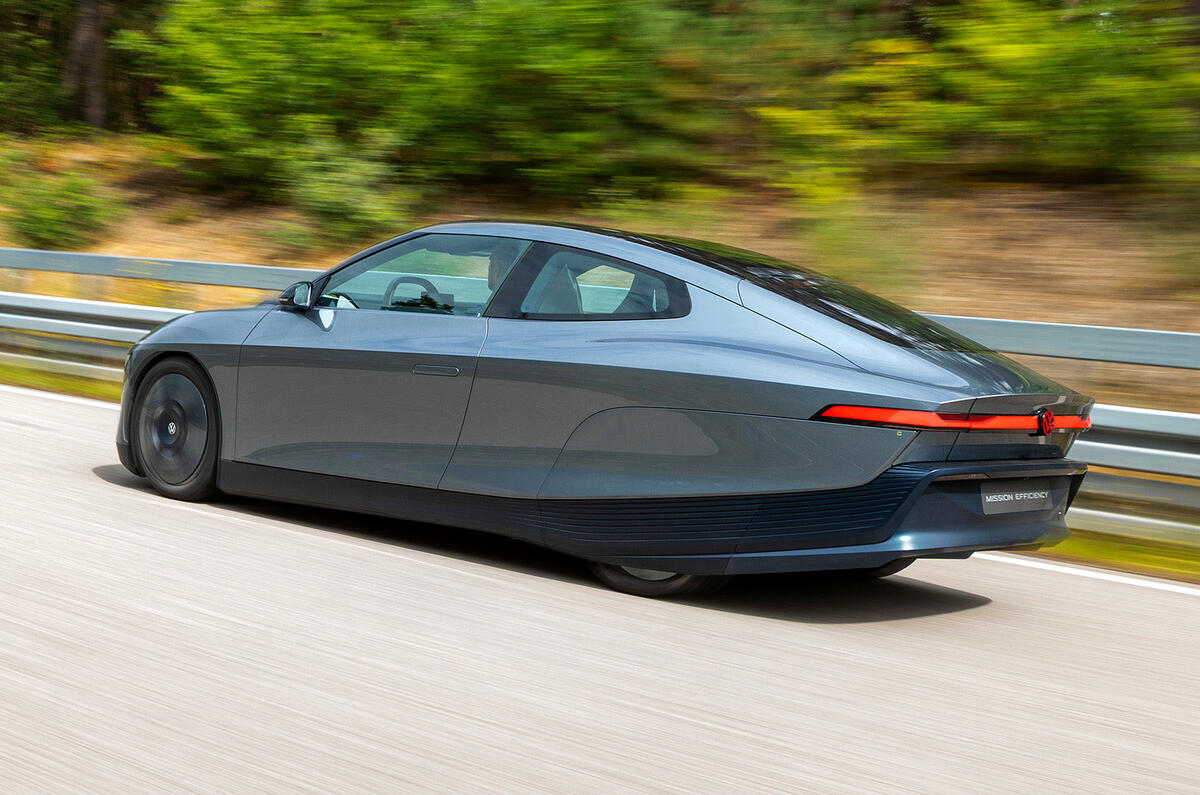
Along with its energy-focused drivetrain set-up, the Mission Efficiency reshapes the MEB+ underpinnings - also used for the Cupra Raval, VW ID Cross and Skoda Epiq - to allow for a lower and longer body, which narrows at the rear so much that the back axle is 17cm slimmer.
The suspension is standard ID Polo hardware, but the underside of the body has been completely covered for improved aerodynamics, helping - along with active intakes on the nose and wheel covers - to make the car slippery enough for a 0.158 drag coefficient. The similarly shaped XL1 - a diesel hybrid designed to travel 62 miles using just one litre of fuel - had a coefficient of 0.189 and today's sleekest production EV, the Mercedes EQS, achieves a Cd of 0.20.
The Continental tyres are also slimmed to 155mm wide and pumped up close to the maximum pressure possible - although the alloy wheels are 18in in diameter, just like the Polo's.
Despite the size increase, the concept is less than 50kg heavier than the ID Polo, at 1.6 tonnes - a subtle weight gain that helps to illustrate how "real world" the car is, VW head of innovation Christoph Riechel told Autocar. Unlike the XL1, the Mission Efficiency was built to be like a "series customer car", with two rear seats and a spacious, 600-litre boot squeezed into its 4.2m-long frame. The rear wheel covers can even be folded out to reveal small storage boxes, with each big enough to house the car's charging cables.
The two front seats are based on those of the T-Roc Cabriolet because they are among the lowest-set in the VW Group parts bin, but in the Mission Efficiency they're made using 3D printing technology to save weight. The dashboard has a removable tablet touchscreen, mounted via a detachable arm, while the driver's display is recognisable from current ID models.
Notably, there are no screens for a digital rear-view camera, as used in the XL1. "We decided to use conventional mirrors along with unpowered door handles to save energy and enhance efficiency," said Riechel. "Further boosting efficiency is the solar roof, which is mounted to the panoramic glass above to provide as much as 370W of energy, helping to power the interior's electronics."
While that 370W peak will only be possible on the sunniest of days, it hints at how future VW models could use solar power to reduce the energy impact of cabin features. An additional benefit of the glass roof in the Mission Efficiency is that it frees up an extra inch or so of head room, which is essential given how low the roofline is. It means the back seats have just about enough space for a near-six-footer. There is also sufficient room for two slim storage trays underneath the rear chairs.
While this apparent real-world readiness contrasts with the experimental nature of the XL1 before it, there's no sign that the Mission Efficiency will ever go on sale in this form. Instead, its first job is to provide VW's engineers and aerodynamicists with a crucial real-world reference point for boosting the efficiency of its existing cars using current-generation tech - without needing to wait for transformative technical advances.
Related News
