Another Automaker Admits Physical Controls Are Important
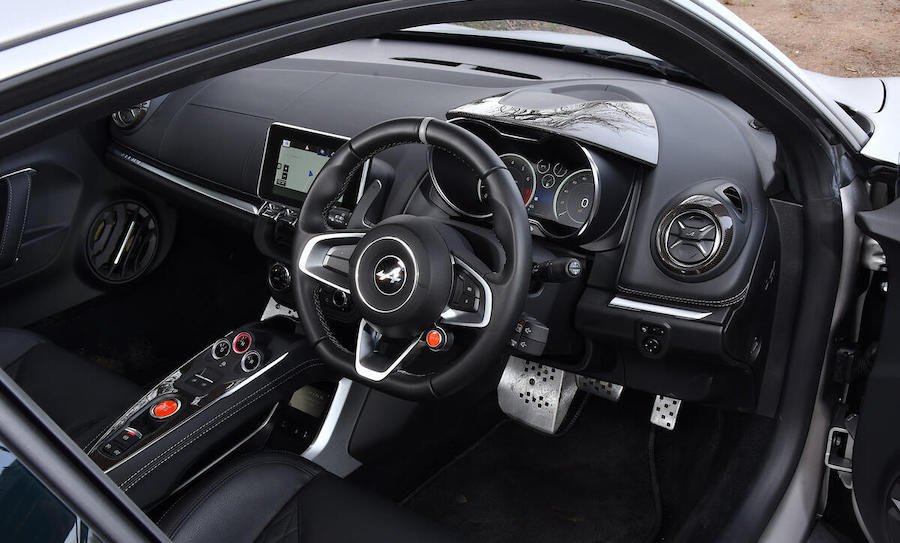
While we recognize that they're useful for some functions, many more common and basic functions are usually better with physical controls. It seems that automakers are finally starting to figure this out, and the latest to do so is French sports car company Alpine.
Tesla, Inc. is an American electric vehicle manufacturer largely attributed to driving the EV revolution. Through the Model S and subsequent products, Tesla has innovated and challenged industry conventions on numerous fronts, including over-the-air updates, self-driving technology, and automotive construction methods. Tesla is considered the world's most valuable car brand as of 2023, and the Model Y the world's best-selling car in the same year, but the brand's greatest achievement is arguably the Supercharger network of EV charging stations.
Sports Cars Need Easy Controls
The news comes from Autocar, which spoke with Alpine's head of design, Antony Villain. He spoke with the magazine about the upcoming A110 sports car, and part of what got our attention was that the company will prioritize physical controls for it and other sporty models. He explained that when you're driving a car where driving is the focus, controls need to be "instinctive." We would argue that even in a normal car, that should also be the case, since every additional second fumbling for temperature or volume controls adds to the danger of even a simple commute. Still, we understand and appreciate what he's saying, since if you're having fun driving, you don't want to be pulled out of the moment to make some adjustments on a big infotainment system. It will take a little time for these slightly more analog cabins to come out, though, as they won't start appearing until the next-generation A110 launches, with other models to follow suit in the future.
Other Automakers Are Realizing the Same Thing
Alpine joins a few other automakers in recognizing that touch controls aren't the solution to everything. One of the most recent ones to start reversing course is Ferrari. The new Amalfi ditched the touch button arrays on the spokes and below the horn for real buttons. Not only that, but the redesigned steering wheel can be retrofitted to the Roma, as well as a bunch of other Ferrari models that all adopted the touch-sensitive unit.
Over at Hyundai, SangYup Lee, an Executive Vice President and the head of the global design center for both Hyundai and Genesis, said that the company would be dedicated to physical controls for basic functions. He shared his feelings that physical controls are safer and easier to use than touchscreens in many situations. Not everyone in the company is on the exact same page. The head of Hyundai's technical center for Europe suggested that touchscreens are the future, but we suspect that if push came to shove, Lee would have the upper hand on this subject.
Even Volkswagen is backtracking on its touch buttons. For several years after their introduction on the eighth-generation Golf and the first ID models, VW's touch buttons and infotainment system have been panned for being difficult to see and use, with the operating system making everything worse by being slow. The operating system has significantly improved, and physical controls are coming back, too. They were previewed on the ID.2all concept with a classic volume knob, and the company confirmed similar controls would be appearing on production models such as the newest Tiguan.
Related News
