BMW Almost Did Something Unthinkable With The Iconic E39 M5
Fans should rejoice that we get another generation of V8 gas power, even if it is supplemented with enough electric juice to satisfy regulators and improve efficiency (while also adding more power).
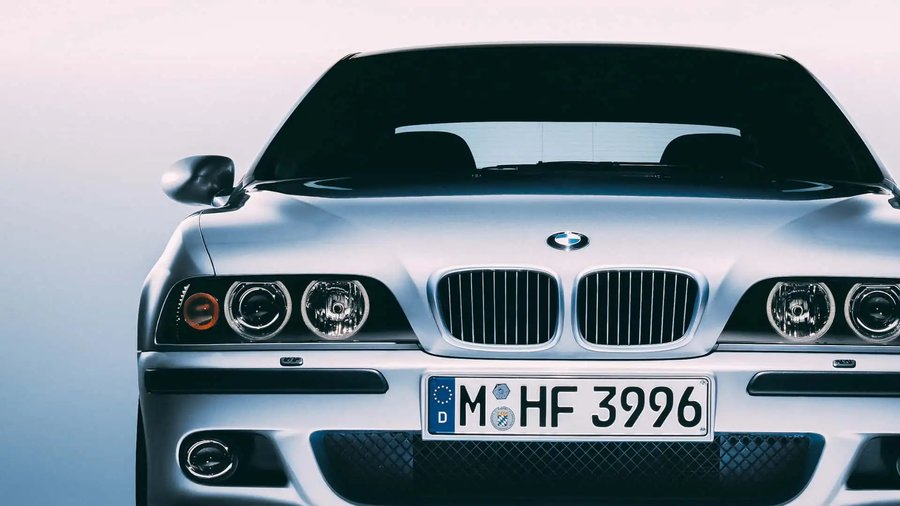
The V8-powered M5 dates back to the E39 generation that debuted in 1998, but we almost didn't get that car. BMW was considering a much different engine setup that likely wouldn't have been nearly as fun to drive.
Leading up to the E39 generation of the German brand's sporty saloon, the previous E28 and E34 generations both featured a tuned inline-six gas engine, arguably the layout for which the brand is best known, be it standard road cars or full-fat M models. Naturally, early ideas for the third-gen E39 model began with a close look at another inline-six, but other considerations were also made. Surprisingly, according to BMW Blog, another early option in the development process was for the automaker to develop a new V6 gas engine – something it had never produced before.
Pleasing Americans With Horsepower Galore
BMW had run into a bit of trouble persuading the American market to buy its "mechanically complex" and more expensive M cars in the 1980s. The company struggled to move the E30 M3 and E34 M5 models in enough quantities to convince BMW's North American executives to consider the new models. That's why the E36 M3 that followed was a specially-tuned model specific to the US, which proved to be more popular than previous M cars. That ultimately helped guide the decision for the E39 to move to a V8 – appeasing Americans' appetite for more horsepower.
Weighing The V8 Versus A New V6
There are limited details about BMW's V6 plans, though the notion likely didn't get very far. It was determined that the timeline and cost of developing an all-new engine layout for a model with a relatively weak legacy of sales would be a move in the wrong direction. For cost-effectiveness, the E39 would have to get a version of an existing engine, leaving BMW with the option of an I6 or V8, the latter offered in existing 530i, 540i, and 740i models. Obviously, BMW ultimately opted for tuning its V8 for the new M5. Still, the mulling over which direction to take reportedly put the program about two years behind schedule.
V8 Changes For The M5
As a result, the existing M62 V8 engine was modified with a new block and bigger displacement, up from 4.4 to 5.0 liters. Engineers added new throttle bodies and an upgraded oil system, culminating in nearly 400 horsepower and a much higher redline of 6,400 rpm. The new engine was dubbed the S62, and it would eventually find its way to the lovely BMW Z8 roadster as well. Even better for enthusiasts, it was made available with a six-speed manual transmission, which competition from other brands at the time failed to offer.
The eight-pot M5 ended up selling vastly more units than any previous generation, proving the decision to lean in to power and American V8 emotion paid off. And now, a quarter-century later, the E39 M5 is regarded as one of the greatest sports sedans of all time.
